Prepared by Mousumi Islam
Entrepreneur | Business Leader | Policy Advocate | Global Connector | Champion of Women’s Empowerment | Social Visionary | Maritime & Blue Economy Leader | Healthcare & Medical Devices Industry Leader
Executive Summary
This fact sheet and research paper outline strategic innovation locations for the manufacturing of medical equipment and devices in Bangladesh, situating the country as a competitive hub within South Asia. The analysis identifies key zones, their comparative advantages, product specialization potential, export readiness, and partnership frameworks. The aim is to provide a national-level roadmap to policymakers, investors, and stakeholders.
Global Benchmarks of Innovation Hubs
- USA (Silicon Valley, Boston, Minnesota): AI-driven medical devices, surgical robotics, wearables.
- Europe (Germany, Switzerland, Ireland): Precision engineering, orthopedics, implants, CE-regulated production.
- Japan & South Korea: Imaging, miniaturization, smart hospital automation devices.
- China & Singapore: Large-scale, cost-effective manufacturing, telemedicine hardware, supply chain hubs.
Bangladesh Innovation & Manufacturing Zones
Dhaka North & South (Tejgaon, Uttara, Mirpur): Prototyping, patient monitors, OT lights/tables, sterilization units.
Gazipur Industrial Corridor: Mass manufacturing of consumables: syringes, IV sets, PPE, hospital furniture.
Narayanganj & Rupganj: Non-woven, disposables, sterile packaging solutions.
Kaliakoir Hi-Tech Park: Digital health integration: telemedicine kits, wearables, portable ultrasound.
Chattogram & EPZ: Export assembly hubs: dialysis modules, large equipment, logistics.
Innovation Priorities for Manufacturers
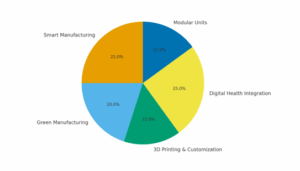
- Smart Manufacturing: IoT-enabled production, automation, AI quality control.
- Green Manufacturing: Renewable-powered facilities, biodegradable plastics, low-waste processes.
- 3D Printing & Customization: Personalized implants, prosthetics, orthopedic solutions.
- Digital Health Integration: Remote monitoring devices, cloud-linked ECG/IVD tools.
- Modular Units: Rapidly scalable decentralized factories, adaptable to demand.
Export Corridors
- Sea: Chattogram (primary), Mongla (secondary).
- Air: HSIA Dhaka for high-value, low-weight exports.
- Land: Benapole, Tamabil, Banglabandha for India and SAARC trade.
Partnerships & Testbeds
- Universities: BUET, MIST, Dhaka University, icddr, b for R&D and testing.
- Hospitals: BSMMU, DMCH, and private hospitals for clinical validation.
- International: JETRO/JICA, Enterprise Singapore, EU Notified Bodies, FDA consultants.
- Industry Associations: MEDMEB, BASIS, BGMEA for cross-industry synergies.
Policy & Incentives Framework
- ISO 13485 certification support for factories.
- Export cash incentives tied to CE/FDA pathways.
- Public procurement preference for domestic manufacturers.
- VAT rebates, bonded warehouses, and duty drawback schemes.
Implementation Timeline
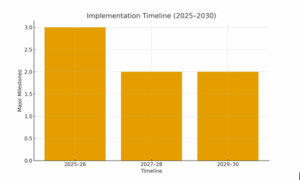
- 2025–2026: Establish cleanrooms, pilot exports to SAARC, and DGDA approvals for 10 SKUs.
- 2027–2028: CE marking for priority devices, expansion into EU/GCC markets.
- 2029–2030: FDA submissions, turnkey clinic modules, global partnerships expansion.
Key Performance Indicators
- 10 ISO 13485 certified plants by 2030.
- 80 DGDA-approved SKUs by 2030.
- Export revenue target: USD 80 million by 2030.
- Creation of 3,000 direct jobs with 40% women participation.
Conclusion
Bangladesh has the potential to become South Asia’s hub for affordable, high-quality medical device manufa-cturing. By strategically positioning innovation zones, aligning with global best practices, and ensuring regulatory readiness, the nation can build a sustainable industry that serves both domestic healthcare needs and international markets.
:%20AI-driven%20medical%20devices,%20surgical%20robotics,%20wearables./li%20liEurope%20(Germany,%20Switzerland,%20Ireland):%20Precision%20engineering,%20orthopedics,%20implants,%20CE-regulated%20production./li%20liJapan%20&%20South%20Korea:%20Imaging,%20miniaturization,%20smart%20hospital%20automation%20devices./li%20liChina%20&%20Singapore:%20Large-scale,%20cost-effective%20manufacturing,%20telemedicine%20hardware,%20supply%20chain%20hubs./li/ulh1Bangladesh%20Innovation%20&%20Manufacturing%20Zones/h1strongDhaka%20North%20&%20South%20(Tejgaon,%20Uttara,%20Mirpur):%20/strongPrototyping,%20patient%20monitors,%20OT%20lights/tables,%20sterilization%20units.strongGazipur%20Industrial%20Corridor:%20/strongMass%20manufacturing%20of%20consumables:%20syringes,%20IV%20sets,%20PPE,%20hospital%20furniture.strongNarayanganj%20&%20Rupganj:%20/strongNon-woven,%20disposables,%20sterile%20packaging%20solutions.strongKaliakoir%20Hi-Tech%20Park:%20/strongDigital%20health%20integration:%20telemedicine%20kits,%20wearables,%20portable%20ultrasound.strongChattogram%20&%20EPZ:%20/strongExport%20assembly%20hubs:%20dialysis%20modules,%20large%20equipment,%20logistics.h1Innovation%20Priorities%20for%20Manufacturers/h1ul%20liSmart%20Manufacturing:%20IoT-enabled%20production,%20automation,%20AI%20quality%20control./li%20liGreen%20Manufacturing:%20Renewable-powered%20facilities,%20biodegradable%20plastics,%20low-waste%20processes./li%20li3D%20Printing%20&%20Customization:%20Personalized%20implants,%20prosthetics,%20orthopedic%20solutions./li%20liDigital%20Health%20Integration:%20Remote%20monitoring%20devices,%20cloud-linked%20ECG/IVD%20tools./li%20liModular%20Units:%20Rapidly%20scalable%20decentralized%20factories,%20adaptable%20to%20demand./li/ulh1Export%20Corridors/h1ul%20liSea:%20Chattogram%20(primary),%20Mongla%20(secondary)./li%20liAir:%20HSIA%20Dhaka%20for%20high-value,%20low-weight%20exports./li%20liLand:%20Benapole,%20Tamabil,%20Banglabandha%20for%20India%20and%20SAARC%20trade./li/ulh1Partnerships%20&%20Testbeds/h1ul%20liUniversities:%20BUET,%20MIST,%20Dhaka%20University,%20icddr,%20b%20for%20R&D%20and%20testing./li%20liHospitals:%20BSMMU,%20DMCH,%20and%20private%20hospitals%20for%20clinical%20validation./li%20liInternational:%20JETRO/JICA,%20Enterprise%20Singapore,%20EU%20Notified%20Bodies,%20FDA%20consultants./li%20liIndustry%20Associations:%20MEDMEB,%20BASIS,%20BGMEA%20for%20cross-industry%20synergies./li/ulh1Policy%20&%20Incentives%20Framework/h1ul%20liISO%2013485%20certification%20support%20for%20factories./li%20liExport%20cash%20incentives%20tied%20to%20CE/FDA%20pathways./li%20liPublic%20procurement%20preference%20for%20domestic%20manufacturers./li%20liVAT%20rebates,%20bonded%20warehouses,%20and%20duty%20drawback%20schemes./li/ulh1Implementation%20Timeline/h1 ul%20li2025–2026:%20Establish%20cleanrooms,%20pilot%20exports%20to%20SAARC,%20and%20DGDA%20approvals%20for%2010%20SKUs./li%20li2027–2028:%20CE%20marking%20for%20priority%20devices,%20expansion%20into%20EU/GCC%20markets./li%20li2029–2030:%20FDA%20submissions,%20turnkey%20clinic%20modules,%20global%20partnerships%20expansion./li/ulh1Key%20Performance%20Indicators/h1ul%20li10%20ISO%2013485%20certified%20plants%20by%202030./li%20li80%20DGDA-approved%20SKUs%20by%202030./li%20liExport%20revenue%20target:%20USD%2080%20million%20by%202030./li%20liCreation%20of%203,000%20direct%20jobs%20with%2040%%20women%20participation./li/ulh1Conclusion/h1Bangladesh%20has%20the%20potential%20to%20become%20South%20Asia’s%20hub%20for%20affordable,%20high-quality%20medical%20device%20manufa-cturing.%20By%20strategically%20positioning%20innovation%20zones,%20aligning%20with%20global%20best%20practices,%20and%20ensuring%20regulatory%20readiness,%20the%20nation%20can%20build%20a%20sustainable%20industry%20that%20serves%20both%20domestic%20healthcare%20needs%20and%20international%20markets.strong%20style=text-align:%20center;emimg%20class=size-medium%20wp-image-2920%20aligncenter%20src=https://mousumiislam.com/wp-content/uploads/2025/09/Screenshot_5-300x171.png%20alt=Fact%20width=300%20height=171%20//em/strongh2/h2h2strong%20style=font-size:%2016px;%20text-align:%20center;emimg%20class=size-medium%20wp-image-2921%20aligncenter%20src=https://mousumiislam.com/wp-content/uploads/2025/09/Screenshot_6-300x180.png%20alt=Fact%20width=300%20height=180%20//em/strong/h2 h1Impact%20of%20the%20Fact%20Sheet/h1h2Policy-Levspan%20style=font-size:%2016px;el%20Impact/span/h2ul%20liGovernment%20Adoption:%20Provides%20a%20ready-made%20roadmap%20for%20a%20href=https://dgda.portal.gov.bd/DGDA/a,%20a%20href=https://www.bida.gov.bd/BIDA/a,%20and%20ministries%20to%20zone,%20incentivize,%20and%20regulate./li%20liLegitimacy%20for%20Advocacy:%20Positions%20a%20href=http://mousumisilam.comMousumi/a%20Islam%20as%20a%20policy%20advocate%20and%20industry%20pioneer./li%20liEvidence-Based%20Push:%20Supplies%20concrete%20benchmarks,%20zones,%20and%20data%20to%20accelerate%20regulatory%20reforms./li/ulh2Business%20&%20Investor%20Impact/h2ul%20liAttracting%20FDI:%20Foreign%20investors%20gain%20confidence%20from%20mapped%20industrial%20clusters./li%20liBank/DFI%20Confidence:%20Multilaterals%20and%20banks%20can%20justify%20financing%20cleanrooms,%20test%20labs,%20and%20sterilization%20plants./li%20liExport%20Deals:%20Creates%20credibility%20for%20long-term%20export%20partnerships%20with%20hospitals%20and%20distributors./li/ulh2International%20Visibility%20Impact/h2ul%20liPositioning%20Bangladesh:%20Establishes%20Bangladesh%20as%20the%20'Affordable%20Innovation%20&%20Manufacturing%20Hub%20for%20South%20Asia.'/li%20liNetworking%20Edge:%20Acts%20as%20a%20conversation%20starter%20with%20JETRO,%20EU%20Horizon,%20Lloyd’s%20Register%20Foundation,%20WHO,%20and%20others./li/ulh2Social%20&%20Economic%20Impact/h2ul%20liHealthcare%20Access:%20Lower%20device%20costs%20and%20faster%20access%20for%20domestic%20hospitals%20and%20clinics./li%20liJobs%20&%20Skills:%20Over%203,000%20direct%20jobs%20by%202030,%20with%2040%%20women’s%20participation./li%20liSustainability:%20Promotes%20green%20manufacturing%20aligned%20with%20UN%20SDGs./li/ulIn%20sum,%20this%20fact%20sheet%20is%20a%20national%20advocacy%20tool,%20an%20investor%20pitch,%20and%20a%20branding%20document%20that%20strengthens%20Bangladesh’s%20role%20in%20global%20medical%20devices%20supply%20chains.)
Impact of the Fact Sheet
Policy-Level Impact
- Government Adoption: Provides a ready-made roadmap for DGDA, BIDA, and ministries to zone, incentivize, and regulate.
- Legitimacy for Advocacy: Positions Mousumi Islam as a policy advocate and industry pioneer.
- Evidence-Based Push: Supplies concrete benchmarks, zones, and data to accelerate regulatory reforms.
Business & Investor Impact
- Attracting FDI: Foreign investors gain confidence from mapped industrial clusters.
- Bank/DFI Confidence: Multilaterals and banks can justify financing cleanrooms, test labs, and sterilization plants.
- Export Deals: Creates credibility for long-term export partnerships with hospitals and distributors.
International Visibility Impact
- Positioning Bangladesh: Establishes Bangladesh as the ‘Affordable Innovation & Manufacturing Hub for South Asia.’
- Networking Edge: Acts as a conversation starter with JETRO, EU Horizon, Lloyd’s Register Foundation, WHO, and others.
Social & Economic Impact
- Healthcare Access: Lower device costs and faster access for domestic hospitals and clinics.
- Jobs & Skills: Over 3,000 direct jobs by 2030, with 40% women’s participation.
- Sustainability: Promotes green manufacturing aligned with UN SDGs.
In sum, this fact sheet is a national advocacy tool, an investor pitch, and a branding document that strengthens Bangladesh’s role in global medical devices supply chains.